Boston Public Works
  • Home
  • Our Seasons
    • 2017
    • 2015 - 2016 Season >
      • Hard and Fast: a love story
      • The 5th Annual Boston One-Minute Play Festival
      • Citizens of the Empire
      • Unsafe
    • 2014 - 2015 Season >
      • Turtles
      • The One-Minute Play Festival
      • From The Deep
      • Three
  • The Playwrights
    • John Greiner-Ferris
    • Cassie M. Seinuk
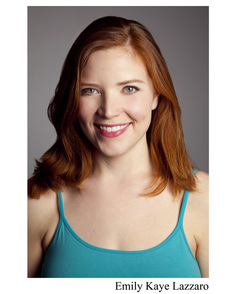
    • Emily Kaye Lazzaro
    • Jess Foster
    • Kevin Mullins
    • Jim Dalglish
    • Laura Neubauer
  • Press
    • 5th Annual Boston 1MPF
    • Citizens of the Empire
    • Hard And Fast: a love story
    • Unsafe: a psychological thriller
    • For The Media
    • Our Story >
      • The Back Story
  • Work With Us
    • Benefactors
  • Blog
  • Contact Us

Announcing OUr Second Season: 2015 - 2016

9/28/2015

1 Comment

 
PictureJohn Greiner-Ferris
Theaters always begin their season announcements with, Such and such theater is excited to announce, or We are pleased or happy to announce. I know personally, it's not that I'm shocked that we're announcing our second season, as much as it is I'm just happy to be here. Kind of like a sophomore in college who comes back on campus a litter wiser, a little smarter, a little more humble, and more than a little excited to see what the year brings.

So, we're announcing our sophomore season, and if all goes to plan, this will be our last season before our final hurrah. But I've learned enough to not look that far ahead. Don't focus on the hurrah. Season by season, play by play, is steady as she goes.

No one said this was going to be easy. I don't mean theater, though that's not easy either. Theater is hard. But it's also so darn fun most of the time you don't see how hard it is. What's hard is putting seven playwrights in a room and saying, ok, we're going to form a company. We're going to work together and we're going to make some cutting-edge theater. On paper that's seems simple, until you try to define cutting-edge. Or even theater.  It's been a long time since I can say I've grown as a person as much as I did last year.  And there were people who were kind enough, in Boston and New York and the farther reaches of the theater world in the United States, who I admire for their own theaters, who were kind and supportive enough to talk to me and listen and offer advice, telling me all the questioning and even sometimes, unfortunately, the harsh words were all normal, keep going, you're doing fine. So, yeah, I can say with a hint of a smile: We're announcing our second season. And yes, we are darn excited about it.

The second season consists of original plays by Jess Foster, Kevin Mullins, and Jim Dalglish. These three were working in the trenches for the other playwrights last year, and now it's their time to step up and showcase their work. The three plays that make up this season are, just like last year's plays, the ones these three playwrights feel the world has to see. Right now, as I type, they are all in various stages of production. Hard and Fast: a love story, our fall production, is about to step into the rehearsal room, and the designers are working together to build a world that centers around cars and a garage. Citizens of the Empire is partially cast. Unsafe probably has the biggest challenge of any of our plays, starting at the Cotuit Center for the Arts on Cape Cod, then moving to Boston.

Please cruise around our site to learn more about us and our work. And for those of you who are so inclined, here is a copy of our press release announcing the season.

See you in the theater.

1 Comment

More Secrets From the Three Secret Box

6/20/2015

0 Comments

 
Picture
Three closes tonight. The three women who met at NYU then embarked on a decade-long friendship will laugh, bicker, fight, and make up one more time.

And you have to wonder if the secret--the big secret--will be kept.

Our audience members seem to know about secrets too. Keeping them. And experiencing the pleasure and relief (release?) of telling their deepest, darkest secrets in the secret box in the lobby.

I have a crush on Kelly Chick.

I'm scared to get married.

I had an abortion.

I don't think I'm actually all that empathetic. I've wondered if I'm a sociopath or perhaps just really selfish.

If I have sex with someone who is bad at it, I will tell them they are great so they never improve.

As a teenager, I would steal money from my parents to buy weed. When they found out, I blamed the cleaning lady. She got fired.

I have very large labia.

I didn't use soap when I washed my hands.

I spend too much time with porn. Like, TOO much time. Seriously, I've got to search hard nowadays to find something new.


0 Comments

Secrets are made to be told. And our audience told theirs.

6/10/2015

0 Comments

 
Picture
Secrets play a major role in Three.

Diane and Sam have a secret that affects their relationship through the life of the play.  Jenni has a secret that could destroy the friendship we've seen evolve throughout the play.  Secrets are part of the dramatic tension of Three. Consider this bit of dialogue:

DIANE - I don't want to tell you, Sam wants to keep it secret.
JENNI - I think we should tell each other secrets later, though. Because it's fun.
DIANE - I love telling secrets.
JENNI - I know you do.
DIANE - It's, like, my favorite thing.
JENNI - I know, that's why I never tell you things I don't want other people to know.
DIANE - Don't tell me your secrets! I will tell everyone.

Or:

JENNI - If I tell you something will you promise to still like me?
DIANE - No.

When audience members know secrets before characters in the play, it makes the audience complicit in the secrecy. It brings the audience into the world of the play in a very visceral way.

Playwright Emily Kaye Lazzaro said that her idea behind the secrets was that the act of telling a secret, whether it's to a friend or to a stranger, is really pleasurable and freeing. "Secrets are sort of made to be told," she said.

Which is why, in the lobby, there is a box. And Emily has asked audience members to anonymously write their secrets on a piece of paper and put them in the box. There are a few prompts to help get ideas flowing. Prompts like, "I'm too scared to have sex because of the face I might make during it" and "You didn't prepare me for how cruel the world can be."

What we weren't prepared for was the honesty and fearlessness that we found from our audience when we opened the box.

I pee in the shower.

I feel like I'm the only thing holding my family together.

I'm ashamed of how I look but want to be a confident woman.

I never acknowledge when I accidentally fart.

I wish I had slept with more of my friends.

If I sit down to eat by myself, I'll cry.


Secrets. What's your secret?


0 Comments

What If Michelangelo Was A Playwright, And Wrote A New Play Named David?

6/2/2015

0 Comments

 
PictureA. Nora Long
A. Nora Long, the director of Three, talks about directing new work  in the theatre.

I had a professor in grad school who compared playwriting to the creation of Michelangelo's masterpiece, David.  Just as Michelangelo revealed the art within that block of marble, so must a writer carve his or her play from a block of time. It always struck me as a lovely image - the idea that under all the sweat and work and worry, the art was just waiting to be uncovered.


It is a rare treat as a director to get to work with a writer on a new play, especially a writer as gifted as Emily Kaye Lazzaro. To extend the David metaphor, there is no thrill quite like being invited into the studio as the hunk of marble takes form. Theatre is a field of many artists but the playwright is the only real generative creative artist - the rest of us only interpret the writer's words in our respective mediums: acting, design, or production. 

In directing any play, I see my function as crafting the experience for the audience, highlighting a singular cohesive performance, incorporating the work of all the artists involved, rooted in the text of the material. In any great play, there are a thousand possible stories to tell, and its my job to tease one out, based on the actors, the venue, current events, what feels the most immediate, the most relevant, the most powerful, the most achievable (that last one's a doozy).

But when you are working on a new play, particularly the first production, I find it necessary to strike a balance between telling the story the playwright is most interested in, the story she or he sets out to write, and illuminating some of the other possibilities lurking within the text. In one famous collaboration (gone awry) one of my favorite writers, Anton Chekhov, believed his plays to be hilarious comedies while their first director, Konstantin Stanislavski, believed them to be great tragedies, which incidentally, is how they are largely remembered today.

Both stories reside in Chekhov's text, and each interpretation says as much about the men in question as it does the plays themselves. While a hundred years on, you may be just as likely to see these plays told as tragedies as on the moon, I can't help but wonder what would have happened had Stan lightened up a little. Would Tony be remembered as a great comedian, or is it because of the gravitas the great director saw that we remember him at all? 


In theatre, we have the asset of many brains and bodies to make the show go on. It's exactly this collaboration of spirit that draws many a writer to a play, rather than a novel or poem, for example. Writing in itself can be a solitary gig, but theatre, for me anyway, is about mucking about in the room with a group of talented artists and seeing what story rises to the surface. 

In this case, Emily and I both hope you agree, it's definitely a comedy. 

A. Nora Long is the associate artistic director at the Lyric Stage Company of Boston, and an artistic director of New Exhibition Room, a Boston-area fringe company that specializes in developing ensemble-based new work. In addition to her administrative role in the company, she has directed and led the creation of several projects with NXR including Shh!, an exploration on the role of censorship which attended the New York International Fringe Festival after a sold-out run in Boston; The Paper Bag Princess, an all-ages show, Midnight at the Last Night Cabaret andEEP! Show.

Find Out More About Three >>
Get Your Tickets To Three >>
0 Comments

Playwriting, Feminism & Genitalia: A conversation with Emily Kaye Lazzaro

5/27/2015

0 Comments

 
Picture
Emily K. Lazzaro's play, Three, is the third and final play of Boston Public Works Theater Company's first season. Co-founder John Greiner-Ferris talked to Emily about her new play.

JGF:
One of the things that I personally desire when I go to the theater is that I want to discover something new about the world, for very much for the same reason I travel. Your plays have always done that for me. You give insight into the world from the perspective of women. The world you show us with Three is very much a world devoid of men. Men hardly exist at all in this play.

EKL:
They do exist, but the play is not about them. They exist though, as husbands and sexual conquest. I was really careful when I was writing Three to make sure that the plot did not revolve around men at all, and it was a challenge. But yeah, that was definitely intentional.

JGF:
Gee, what if men wrote plays like that?—as women as wives or sexual conquest? Oh wait, they do. What happens when you flip that model on its ear?

EKL:
That is the question! Also, is it the responsibility of the marginalized group to represent all people equally, like to be better than our forebears, or do we have to tell our lady stories because the lady stories haven’t been around enough yet? I decided in this case that this play was just not going to be about men. For this particular moment, that’s my contribution.

JGF:
You self-define as a feminist playwright. What does that mean?  How did you come to this definition of yourself over your life? Over your writing career?

EKL:
I pay a lot of attention to gender when I’m writing. The first play I wrote was basically about me as a sixteen-year-old, but I made the character a boy because I thought it would be taken more seriously. As a woman, I feel I’ve been conditioned to think that stories about men are more serious/valuable; it’s something I’ve internalized from a very young age, and I had to fight against it. There’s something wrong with that, I think. Girls are often told their stories are not interesting, serious, or valuable. So I write plays about women. It’s not that radical, but it also sort of is.

JGF:
There’s something definitely wrong if women believe that stories about men are more important than stories about women. Where did that notion come from in your life?

EKL:
Who knows where thoughts come from, they just appear! (Ten points if you get that reference.)

JGF:
Structurally, Three is an interesting play. Three women. Three events. Three points in the characters’ lives. We’re also introduced into the world as an event is taking place—we just jump right into a conversation between Sam and Diane and also into a whirlwind of events—and there really isn’t a final ending: We just leave their world. What are you saying about this world, or about these characters, with the structure of the play?

EKL:
I have a theory that lots of people in their twenties go through three distinct phases on their journey toward becoming adults. The first is a phase I call the search for validation, when lots of people have sex to prove that they’re alive. The second phase is loneliness, when you are finally free from institutions and have to forge your own way. It’s lonely to be without an official institution containing your experiences. The third phase is when everything falls apart. Your family starts to age and die, people get sick, people have financial problems, people cheat, biological clocks start ticking, on and on and on. So that’s where the structure came from: three phases of being a twenty-something.

JGF:
That’s a pretty grim view of a person’s twenties, isn’t it? Or even life in general? 

EKL:
Yeah my plays are not usually very cheerful. They’re fun, though! They’re sort of like the music of The Smiths. They have a peppy beat but they are about death.

JGF:
Let’s talk a bit about these characters’ relationships with one another? Are they friends?  These women seem to crave an intimacy that’s not possible in this group. It seems almost repetitious the way one of the characters has a problem, tries to bring it up with another character, that character shuts the other character down with verbal abuse, then they apologize to one another and move on. Am I reading this right??

EKL:
They are friends. They know each other really well and there is a certain pleasure in being told about yourself by someone who has known you for a long time. They are closer to siblings than friends. Siblings are often very mean to each other, because they have been through a lot together. The fear of the characters in this play is that they will lose each other, and in so doing they will lose the only people in the world who truly know them.

JGF:
I think what’s interesting for someone my age, who’s in his fifties, is that they have no idea what’s coming in their thirties and forties when they as people will really solidify their personalities and they will forge stronger, but perhaps different relationships with spouses, new acquaintances and who knows who else.  And you leave a live time bomb ticking in their midst at the end of the play.

EKL:
Yeah, this play is very much about the experience of being in your twenties. I think a lot of audience members will look at these characters with a sort of bemused smirk.

JGF:
What’s up with all the genitalia references? Or do we really have to address that part of the play? Men, supposedly, talk about tits and ass and their dicks all of the time. Is it that big of deal that women, or at least these women, do?

EKL:
These characters talk about penises because it’s fun and interesting and funny to them. And they knew each other before they had regular sex so they’ve been on this journey of sexual discovery together. When they met, I think they were all virgins. I don’t know about other people, but the friends I still have that were my friends when I was a virgin know a lot more about my sexual life than the friends I’ve made as an adult.

JGF:
There has been press that feminism is being rejected. What would Sam, Diane, or Jenni say about that?

EKL:
Ha ha. Feminism isn’t being rejected. Feminism is just the belief that women are people. That’s silly, John.

JGF:
Who is your favorite feminist playwright? Who are/were your playwriting influences?

EKL:
Caryl Churchill. A lot of my influences are TV and film writers, though. Tina Fey, Mindy Kaling, Amy Poehler.

JGF:
Given that Boston Pubic Works is about all of the playwrights producing one of their plays that they insist must be seen, why did you pick this play for your BPW play?

EKL:
I don’t think any other theater, reading the synopsis of this play, would ever produce it. The synopsis is “Three young women are friends with each other and they try to grow up.” That’s kind of it. Of course it’s more than that, but it doesn’t have robots or make especially grand statements. I didn’t think it would sell, but I know it’s a good play and  I know people will like it, so I figured this was my chance.

Learn more about Three >>
Get ticket to Three >>
0 Comments

From the Deep opened to a great week (Pictures)

3/17/2015

1 Comment

 
After a great opening weekend, you're not going to want to miss out on this compelling show that will keep you on the edge of your seat until its end.
Images by Marc Franklin
1 Comment

From The Deep: An Actor's View

3/12/2015

1 Comment

 
Sara Bookin-Weiner, the From the Deep dramaturg, asked actor Charlie Linshaw a few questions about his time with this play and experience bringing Ilan to life.

You've been involved with this project for a while. When did you start working with Cassie and Lindsay on it, and what's kept you with it?

I was part of the first reading in May 2013 at Interim Writers. I completely fell in love with the play and Cassie just kept inviting me to be involved in more readings. I thought from the beginning that an actor in his early twenties would play Ilan, and so my primary interest was in helping Cassie develop her play.

How has your character evolved since you began working on the play?

Ilan has become more complicated. He has more flaws and more secrets. We rehearsed for most of the readings, so we’d done a lot of table work by the time we assembled to begin rehearsing for this production. The work changes when you get up on your feet and eventually put your script down. Ilan is always busy doing things. He’s also very reactive and can be playful one moment and enraged the next. I’ve been working on finding his lighter side. He needs his sense of humor to survive.

What elements of your character do you connect or identify with, and how? 

It’s an interesting question because I’m playing someone with very different experiences: I’m not Israeli, I haven’t been in the army, and I’ve never been a prisoner of war. But my job isn’t to have had those experiences; it’s to use my body and voice in the collaborative telling of a story. The audience knows I’m an actor, so that’s part of our agreement. That being said, I’m human, so I know about loneliness, loss, love, anger, responsibility, and compassion. I see a lot of Ilan in myself. I also see some of Andrew in me. I think in really great plays, we often can find ourselves reflected in all the characters on stage, good and bad, and this can be wonderful and also unsettling.

What's been your favorite rehearsal moment?

I love rehearsal. I wish we could do it for eight weeks. But there was a day last week, where a tough scene finally just sort of clicked. Lindsay had me play with the ping-pong paddle, and all of a sudden there was a scene. I know that’s vague, but I don’t want to give anything away. Jeff has also begun to make Andrew increasingly defiant and funny, and it can be really hard not to laugh. But I think Ilan would feel the same way.

Do you still want to play ping-pong after this?

Ping-pong has been surprisingly fun. I say surprisingly only because I was always the worst one in a family of avid ping-pong players. So I was actually dreading this part of the process. I wasn’t sure I’d be able to hit the ball on the table. But there has been some improvement. I wasn’t expecting it to be as relaxing and meditative as it’s been. So the answer is yes.


1 Comment

Sam Layco Gets "Deep"

3/9/2015

0 Comments

 
Picture
We asked the team of From the Deep three questions about Boston Public Works' upcoming production, and over the next few weeks we will share their answers with you.

Meet Sam Layco, the assistant stage manager for From the Deep, a recent transfer from Portland, Oregon to Boston, Sam braved her first real winter and kept our actors on track, all at the same time and all while riding her bike! Learn more about Sam, her wedding proposal, and see the magic that Sam will make happen during this show! We begin previews this Thursday and open Saturday!

0 Comments

Rose Fieschko Gets "Deep"

3/6/2015

0 Comments

 
We asked the team of From the Deep three questions about Boston Public Works' upcoming production, and over the next few weeks we will share their answers with you.  

Meet Rose Fieschko, the fight director for From the Deep, one sweet yet badass chick who can show you how to take down someone double your size, dance and fly like a performer in Cirque, and still find time to snuggle with her favorite memento.  Check out Rose and come see the fights for real in just seven days!t
0 Comments

The inspiration Behind From The Deep

3/2/2015

0 Comments

 
In Cassie M. Seinuk’s From the Deep, we watch Andrew and Ilan’ interaction in captivity – a place full of trauma and uncertainty. Loosely inspired on Jonathan Dailey and Gilad Shalit, the real-life counterparts for these characters were also countries and years apart, never having even met. Despite this, Seinuk draws inspiration from local and international cases, bringing attention to not just prisoners of war but missing persons everywhere.
Picture
Jonathan Dailey (Inspiration for Andrew)

Early Life: Born and raised in Charlotte, Norh Carolina, Dailey studied architecture with his friend Miles Smith at Appalachian State University.

Boston: Dailey moved to Boston with Smith for graduate school at Boston Architectural College. During the time of his disappearance he had taken a semester off due to financial reasons.

Disappearance: Went missing on October 2, 2012 and was last seen in Allston, Massachusetts by Smith. He didn’t answer phone calls or show up for his job as a sales associate in Cambridge, Massachusetts.

Finding: On October 9, 2012, Boston University rowing coach saw a body in the Charles River, ankles in chains and tied to a cinder block. The dental records were later matched with Dailey’s, though.

Picture
Gilad Shalit (Inspiration for Ilan)

Early Life: Born in Nahariya, Israel, Shalit excelled in science at his high school before beginning is military service in July 2005.

Capture: On June 25, 2006, an attack on the Gaza Strip left Shalit wounded in his gunner’s seat in a tank; he was captured.

Life in Captivity: To keep his sanity, Shalit maintained a daily schedule and itinerary and was constantly active, making up lots of games to keep his mind occupied.

Timeline:

June 2007 — Audio released that proved he was alive.

April 2008 — Hamas leader confirmed Shalit was alive.

June 2008 — The last of a series of letters Shalit sent to his family.

October 2009 — A video was released where Shalit appealed to his family and the Israeli Prime Minister to release him from captivity.

October 2011 — Shalit is released after five years in captivity.

Andrew and Ilan in Rehearsal
Working on characters who have real life groundings comes with perks and challenges. Through dramaturgical research, Charles (Ilan) and Jeff (Andrew) have learned about the back-stories that inspired the fictional figures they portray, and this research informs their understanding of these people. But it’s also up to them to decide: when do you remain true to these characters’ real-life counterparts, and when do you create your own unique interpretation that isn’t connected to them? Andrew and Ilan are very much their own people; Andrew’s personality is more closely connected to his scripted lines than to Jonathan Dailey’s life, and Ilan’s demeanor is written as much more of an energetic go-getter than Gilad Shalit. By both using the background material on Jonathan and Gilad, and letting the creative juices run freely while we play in rehearsal, Jeff and Charles have crafted an Andrew and Ilan that pay homage to their inspiration, while becoming their own unique characters in a very similar situation.

Back to From the Deep >>
0 Comments
<<Previous
Forward>>

    Boston Public Works Theater Company

    We're a group of playwrights in Boston who have banded together to produce one play each, then we will disband.

    Get Tix to Los Meadows

    Archives

    June 2017
    April 2017
    October 2016
    September 2016
    April 2016
    March 2016
    February 2016
    January 2016
    December 2015
    November 2015
    October 2015
    September 2015
    June 2015
    May 2015
    March 2015
    February 2015
    January 2015
    December 2014
    November 2014
    October 2014
    September 2014
    June 2014
    May 2014
    April 2014
    March 2014
    February 2014
    January 2014

Boston Public Works is a sponsored project of Fractured Atlas, a non-profit arts service organization. Contributions for the charitable purposes of Boston Public Works must be made payable to Fractured Atlas only and are tax-deductible to the extent permitted by law.
Home page and header image courtesy of 
Boston Discovery Guide 
(c) Copyright BostonDiscoveryGuide.com
Picture
This project is made possible in part by funding from
Eastern Bank Charitable Foundation and
The Particle Foundation

Picture
Picture
You can follow our journey through The Works, Boston Public Works Newsletter. Sign up here. 
Home
Our Story
The Playwrights
News & Reviews
Collaborate
Blog
Contact BPW
Donate now